Education at different levels
As per NEP 2020, new 5+3+3+4 structure of school education with a strong base of new education structure of school education. Early Childhood Care and Education (ECCE) is very important recommendation. The present education system will cover children from the age of 3 to 18 with the motto of overall learning, development and well-being.
Primary Education as per NEP 2020
Pre-primary(Foundational) Education
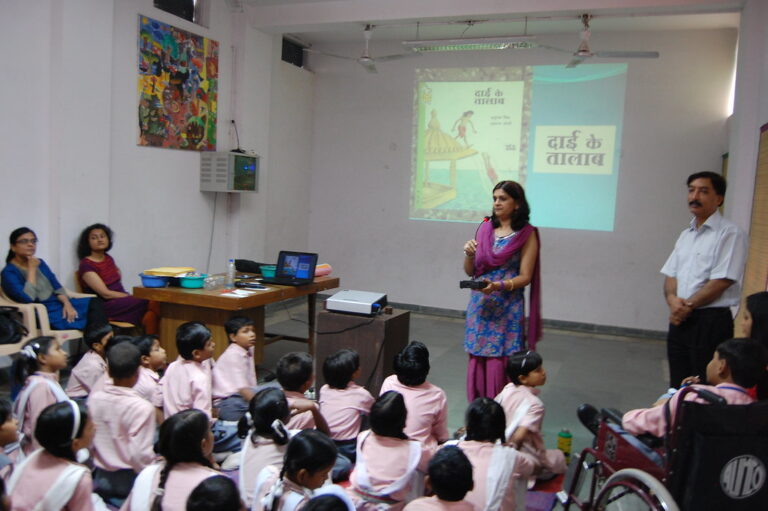
The foundational stage will consist of five-years of flexible, multilevel, play/activity-based learning. It will cover age group of 3-8 years in two parts, i.e. two years in Anganwaadi and three years in primary schools in grades Balwatika, grade 1 and grade 2.
Upper Primary(Preparatory) Education
Preparatory Stage will comprise three years of education covering the ages 8-11. This will follow education building on the play, discovery, and activity based pedagogical and curricular style of the foundational stage.
Middle Education as per NEP 2020
Middle Stage will comprise three years of education covering age group of 11-14 and grades 6-8. More abstract concepts, experiential learning within each subject, and exploration will be encouraged and emphasized despite the introduction of more specialized and subject teachers.
Secondary Education as per NEP 2020
The secondary stage will comprise of four years of multidisciplinary study, building on the subject-oriented pedagogical and curricular style of Middle stage, but with greater depth, greater critical thinking, greater attention to life aspirations, and great flexibility and student choice of subjects. There are two stages under secondary education:
Secondary Education
The existing grades i.e. 9th & 10th will be called secondary education. There will be greater flexibility and option of students’ choice in subjects of science, Social Science and mathematics in which basics and advanced versions will be made available. Students will take advance version or basic version of available subject as per their choice at senior secondary level. Choosing basic or advance course out of available subjects at secondary level will determine the selection of course at senior secondary level. In broader terms, this stage will decide the path of study.
Senior Secondary Education
Senior secondary education will comprise of 11th & 12th Grades. There will be no hard separation among arts, science and humanities or between vocational and academic streams. Students will choose the subjects of their interest from the available subject basket. The senior secondary stage will prepare learner for his/her future employment. More vocational courses will be introduced at this stage. School complex will take the responsibility of running almost all available courses by promoting resource sharing.

Rajni is an accomplished education professional who holds a PhD in Education and MPhil and MA degrees in Economics. She has extensive experience in research, having published over 16 research articles in peer-reviewed journals and contributed to articles in an edited book. Additionally, Rajni has authored a book in the field of education.
Rajni is passionate about making a difference in the field of education. She is an aspirant who is eager to do something innovative and valuable and is constantly striving towards creating a positive impact. She believes that education is a powerful tool which can change lives and that every student deserves access to quality education.
Rajni has a strong work ethic and a deep commitment to her profession. She is driven by her passion to learn, explore and contribute to the growth of the education sector. Her knowledge and experience in Economics and Education, combined with her intellectual curiosity and research skills, place her in a unique position to push the boundaries and creatively tackle complex challenges in the education field.
Overall, Rajni is an accomplished and driven professional who is poised to continue making a meaningful contribution in the field of education.